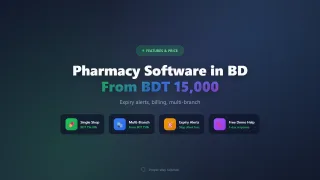
Running a pharmacy in Bangladesh means juggling thousands of items, expiry dates that can destroy your profit, and customers who expect the right medicine in seconds. Doing all of this in a paper register works until it does not. Pharmacy management software fixes it, but prices and features vary widely, so here is an honest guide.
What Pharmacy Software Actually Does
A good pharmacy system connects your counter, your stockroom, and your accounts into one flow:
- Billing at the counter with barcode scanning
- Live stock levels for every item and batch
- Expiry tracking with alerts before medicine becomes a loss
- Purchase records linked to distributors
- Sales reports by day, product, and margin
- Customer history for regulars and prescription records where needed
The core value is simple: you stop losing money to expired stock and stock-outs, and you always know what you actually earned.
Features That Matter Most in Bangladesh
Not every feature list deserves equal weight. Based on what pharmacy owners here actually struggle with, prioritise these:
| Feature | Why It Matters Here |
|---|---|
| Batch-wise expiry alerts | Expired stock is the number one silent loss in BD pharmacies |
| Generic/brand alternatives search | Helps serve customers when a brand is out of stock |
| Bengali support on receipts and screens | Staff adoption is much faster |
| Distributor-wise purchase entry | Makes returns and claims painless |
| Offline mode | Internet drops should never stop the counter |
| VAT-ready invoicing | Keeps you clean with regulators |
Features like loyalty points or online ordering are nice later. Do not pay extra for them before the basics are solid.
One more point worth repeating: whatever system you choose, insist that your data can be exported at any time in a readable format. Pharmacies change vendors more often than any other small business we serve, and clean exportable data is what makes that move painless instead of painful.
Typical Prices in Bangladesh
Pharmacy software here comes in three shapes:
| Option | Typical Cost (BDT) | What You Get |
|---|---|---|
| Ready-made local pharmacy software | 15,000 to 60,000 one-time, plus yearly AMC around 15 to 20 percent | Standard billing, stock, expiry; fastest to start |
| Subscription-based apps | 1,000 to 3,000 per month | Cloud access, low upfront cost |
| Custom-built system | 100,000 to 400,000 depending on branches | Your exact workflow, multi-branch, integrations |
Add-ons to budget for: barcode scanner and printer (5,000 to 15,000), data entry of your opening stock, and staff training. A fair dealer bundles setup and training into the price; ask before paying.
If you want to understand how support contracts work after purchase, our plain-English explainer on AMC and SLA covers it: software-support-contract.
Single Shop vs Multiple Branches
This choice changes everything.
Single shop: a ready-made package almost always wins. It is proven, cheap, and the vendor has configured it a hundred times. You can be billing from it within two or three days.
Multiple branches: you need central control. Head office must see stock and sales across locations, transfer medicines between branches, and consolidate accounts automatically. This is where custom systems or higher-tier packages earn their price. Expect BDT 150,000 upward for a proper multi-branch build, which is usually still cheaper than the losses from uncoordinated buying across branches.
How to Judge a Demo Properly
Every vendor demos well. Test these specific things yourself during the demo:
- Enter a sale with an expired batch and see if the system stops or warns you.
- Search a medicine by first few letters and check the speed.
- Ask them to show yesterday’s sales report with margin, live, not pre-made.
- Disconnect the internet and keep billing if they claim offline support.
- Ask how returns to distributor are recorded.
If any answer is vague, treat it as a no. Ten minutes of hands-on testing tells you more than an hour of slides.
Common Mistakes to Avoid
- Buying the cheapest package without checking expiry handling. Cheap software that misses expiries costs more than it saves.
- Skipping training to save a day. Untrained staff fall back to paper within a month.
- Not asking about the annual maintenance cost upfront. Some vendors quote low then charge heavily each year.
- Ignoring data backup. Your sales and stock history must be backed up daily, automatically.
FAQ
How long does it take to start using pharmacy software?
Ready-made packages take two to three days including stock entry for a mid-size shop. Custom systems take four to eight weeks.
Can it handle both generic and branded medicines?
Yes, standard systems store salt/generic names against brands so you can find alternatives instantly when something is out of stock.
Does it work without internet?
Most locally installed packages do. Cloud apps need connectivity, though some offer offline modes. Confirm this matches your shop’s reality.
What is the yearly maintenance cost?
Typically 15 to 20 percent of the license price for ready-made software, covering updates and support. Get it in writing.
Is my sales data safe?
With a local installation, data stays on your computer and you control backups. With cloud apps, ask where servers are and whether you can export everything anytime.
Want a shortlist matched to your shop size and budget? Contact Proper Way Solution for a free consultation on pharmacy management software in Bangladesh.




Leave a Comment